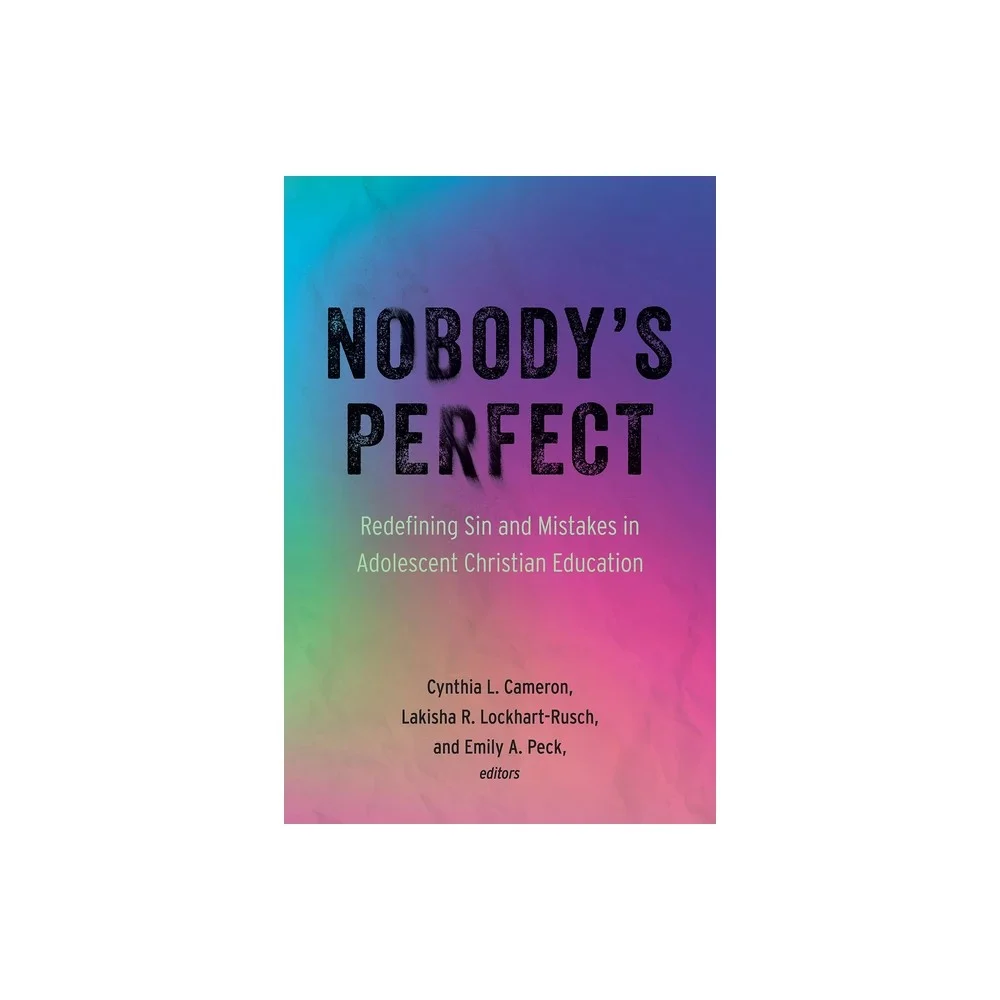
Nobody's Perfect: Redefining Sin and Mistakes in Adolescent Christian Education
Cynthia L. Cameron, Lakisha R. Lockhart-Rusch, Emily A. PeckPaperback 2025-02-25
Cynthia L. Cameron, Lakisha R. Lockhart-Rusch, and Emily A. Peck argue that some adolescents have the privilege to make mistakes in ways that others often do not. In Nobody's Perfect, the editors offer a curated volume that affirms adolescents as fundamentally good and presents pathways that help youth distinguish mistakes from sin.|<p>Adolescents, like everyone else, make mistakes. However, religious educators Cynthia L. Cameron, Lakisha R. Lockhart-Rusch, and Emily A. Peck argue that some youths are born with the privilege of making mistakes in ways that others often are not. They also argue that many Christian education practices that guide our understandings of mistake-making are shaped by gender and gender identity, sexual orientation, and race in ways that disenfranchise some adolescents.</p>
<p>In response, Cameron, Lockhart-Rusch, and Peck curate a much-needed conversation that helps religious educators accompany adolescents and better understand mistakes based on a theological framework that names adolescents as fundamentally good. The result is an edited volume that explores ways educators can walk with adolescents so that youth can learn from their mistakes and grow without misunderstanding all mistakes as sin. Together, these essays seed a theology of adolescent goodness that's rooted in a liberative Christian theological anthropology.</p> <p>Drawing on both qualitative and quantitative research, <i>Nobody's Perfect</i> offers nuanced and robust definitions of what a mistake is, apart from definitions of sin. The book also explores the challenges of talking about mistake-making and sin with adolescents within religious institutional contexts that shape policy, pastoral practice, and ministry orientations. Finally, the book presents youths' own voices about how they understand and process what mistake-making looks like in the contexts in which they live and learn.</p> <p><i>Nobody's Perfect</i> is for Christian educators who serve either in the academy or in congregational settings. The book well serves educators who recognize the various cultural and developmental challenges adolescents face when their church communities. The book also offers tools to help such church leaders attend to religious education spaces with a renewed theology that can root a more liberative experience of religious education.</p>|<p>Adolescents, like everyone else, make mistakes. However, religious educators Cynthia L. Cameron, Lakisha R. Lockhart-Rusch, and Emily A. Peck argue that some youths are born with the privilege of making mistakes in ways that others often are not. They also argue that many Christian education practices that guide our understandings of mistake-making are shaped by gender and gender identity, sexual orientation, and race in ways that disenfranchise some adolescents.</p> <p>In response, Cameron, Lockhart-Rusch, and Peck curate a much-needed conversation that helps religious educators accompany adolescents and better understand mistakes based on a theological framework that names adolescents as fundamentally good. The result is an edited volume that explores ways educators can walk with adolescents so that youth can learn from their mistakes and grow without misunderstanding all mistakes as sin. Together, these essays seed a theology of adolescent goodness that's rooted in a liberative Christian theological anthropology.</p> <p>Drawing on both qualitative and quantitative research, <i>Nobody's Perfect</i> offers nuanced and robust definitions of what a mistake is, apart from definitions of sin. The book also explores the challenges of talking about mistake-making and sin with adolescents within religious institutional contexts that shape policy, pastoral practice, and ministry orientations. Finally, the book presents youths' own voices about how they understand and process what mistake-making looks like in the contexts in which they live and learn.</p> <p><i>Nobody's Perfect</i> is for Christian educators who serve either in the academy or in congregational settings. The book well serves educators who recognize the various cultural and developmental challenges adolescents face when their church communities. The book also offers tools to help such church leaders attend to religious education spaces with a renewed theology that can root a more liberative experience of religious education.</p>|<p><b>Foreword </b>by Almeda M. Wright</p> <p><b>Introduction: Adolescents are Good </b>by Cynthia L. Cameron, Lakisha R. Lockhart, and Emily A. Peck</p> <p><b>Chapter 1: The Rhetoric of Relationships, Sin, and Mistake-Making</b> by Cynthia L. Cameron</p> <p><b>Chapter 2: Mistake and Sin in Adolescent Sexuality </b>by Emily Kahm</p> <p><b>Chapter 3: Christian Girlhood Books and Evangelical Culture </b>by Jennifer Moe</p> <p><b>Chapter 4: Companioning Youth through their Mistakes </b>by David Penn</p> <p><b>Chapter 5: Queerness in Light of God's Goodness in Creation </b>by Dana Myers</p> <p><b>Chapter 6: Contradictory Church Messages Toward LGBTQIA Youth</b> by Sarah Leer</p> <p><b>Chapter 7: How Reconciling United Methodist Youth Lead While Disagreeing with their Denomination </b>by Emily A. Peck</p> <p><b>Chapter 8: The Color of Safety for Racialized Youth </b>by Lakisha Lockhart</p> <p><b>Chapter 9: The Mistaken Consumer Culture of U.S. Society</b> by Christopher J. Welch</p> <p><b>Conclusion: May It Be So </b>by Cynthia L. Cameron, Lakisha R. Lockhart-Rusch, and Emily A. Peck</p> <p><b>Epilogue </b>by Patrick Reyes</p>$49.98
$49.98
Click & collect: Select your store
Get information on product availability in store.

.png&w=64&q=75)
.png&w=64&q=75)

.png&w=48&q=75)
Cynthia L. Cameron, Lakisha R. Lockhart-Rusch, and Emily A. Peck argue that some adolescents have the privilege to make mistakes in ways that others often do not. In Nobody's Perfect, the editors offer a curated volume that affirms adolescents as fundamentally good and presents pathways that help youth distinguish mistakes from sin.|<p>Adolescents, like everyone else, make mistakes. However, religious educators Cynthia L. Cameron, Lakisha R. Lockhart-Rusch, and Emily A. Peck argue that some youths are born with the privilege of making mistakes in ways that others often are not. They also argue that many Christian education practices that guide our understandings of mistake-making are shaped by gender and gender identity, sexual orientation, and race in ways that disenfranchise some adolescents.</p>
<p>In response, Cameron, Lockhart-Rusch, and Peck curate a much-needed conversation that helps religious educators accompany adolescents and better understand mistakes based on a theological framework that names adolescents as fundamentally good. The result is an edited volume that explores ways educators can walk with adolescents so that youth can learn from their mistakes and grow without misunderstanding all mistakes as sin. Together, these essays seed a theology of adolescent goodness that's rooted in a liberative Christian theological anthropology.</p> <p>Drawing on both qualitative and quantitative research, <i>Nobody's Perfect</i> offers nuanced and robust definitions of what a mistake is, apart from definitions of sin. The book also explores the challenges of talking about mistake-making and sin with adolescents within religious institutional contexts that shape policy, pastoral practice, and ministry orientations. Finally, the book presents youths' own voices about how they understand and process what mistake-making looks like in the contexts in which they live and learn.</p> <p><i>Nobody's Perfect</i> is for Christian educators who serve either in the academy or in congregational settings. The book well serves educators who recognize the various cultural and developmental challenges adolescents face when their church communities. The book also offers tools to help such church leaders attend to religious education spaces with a renewed theology that can root a more liberative experience of religious education.</p>|<p>Adolescents, like everyone else, make mistakes. However, religious educators Cynthia L. Cameron, Lakisha R. Lockhart-Rusch, and Emily A. Peck argue that some youths are born with the privilege of making mistakes in ways that others often are not. They also argue that many Christian education practices that guide our understandings of mistake-making are shaped by gender and gender identity, sexual orientation, and race in ways that disenfranchise some adolescents.</p> <p>In response, Cameron, Lockhart-Rusch, and Peck curate a much-needed conversation that helps religious educators accompany adolescents and better understand mistakes based on a theological framework that names adolescents as fundamentally good. The result is an edited volume that explores ways educators can walk with adolescents so that youth can learn from their mistakes and grow without misunderstanding all mistakes as sin. Together, these essays seed a theology of adolescent goodness that's rooted in a liberative Christian theological anthropology.</p> <p>Drawing on both qualitative and quantitative research, <i>Nobody's Perfect</i> offers nuanced and robust definitions of what a mistake is, apart from definitions of sin. The book also explores the challenges of talking about mistake-making and sin with adolescents within religious institutional contexts that shape policy, pastoral practice, and ministry orientations. Finally, the book presents youths' own voices about how they understand and process what mistake-making looks like in the contexts in which they live and learn.</p> <p><i>Nobody's Perfect</i> is for Christian educators who serve either in the academy or in congregational settings. The book well serves educators who recognize the various cultural and developmental challenges adolescents face when their church communities. The book also offers tools to help such church leaders attend to religious education spaces with a renewed theology that can root a more liberative experience of religious education.</p>|<p><b>Foreword </b>by Almeda M. Wright</p> <p><b>Introduction: Adolescents are Good </b>by Cynthia L. Cameron, Lakisha R. Lockhart, and Emily A. Peck</p> <p><b>Chapter 1: The Rhetoric of Relationships, Sin, and Mistake-Making</b> by Cynthia L. Cameron</p> <p><b>Chapter 2: Mistake and Sin in Adolescent Sexuality </b>by Emily Kahm</p> <p><b>Chapter 3: Christian Girlhood Books and Evangelical Culture </b>by Jennifer Moe</p> <p><b>Chapter 4: Companioning Youth through their Mistakes </b>by David Penn</p> <p><b>Chapter 5: Queerness in Light of God's Goodness in Creation </b>by Dana Myers</p> <p><b>Chapter 6: Contradictory Church Messages Toward LGBTQIA Youth</b> by Sarah Leer</p> <p><b>Chapter 7: How Reconciling United Methodist Youth Lead While Disagreeing with their Denomination </b>by Emily A. Peck</p> <p><b>Chapter 8: The Color of Safety for Racialized Youth </b>by Lakisha Lockhart</p> <p><b>Chapter 9: The Mistaken Consumer Culture of U.S. Society</b> by Christopher J. Welch</p> <p><b>Conclusion: May It Be So </b>by Cynthia L. Cameron, Lakisha R. Lockhart-Rusch, and Emily A. Peck</p> <p><b>Epilogue </b>by Patrick Reyes</p>