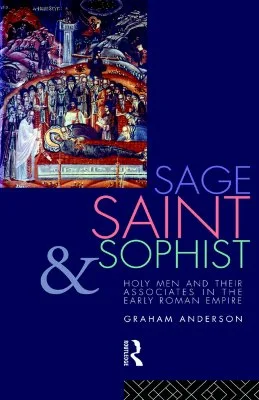
Sage, Saint, and Sophist
Graham AndersonHardback 1994-05-17
Publisher Description
"Sage, Saint and Sophist" explores the experience of holy men, both pagan and Christian, and the extent of their participation in the Roman Empire's religious climate which often wavered between faith and superstition. Graham Anderson discusses the atmosphere of belief in these centuries, grounding this issue in the context of Roman social history. ? There has not been a general historical study of early imperial holy men of any kind since Bieler's portrait "Theios Aner" over half a century ago. Anderson applies techniques of literary and prosopographical analysis to bear on a varied cross-section of these figures from Jesus Christ to Peregrinus Proteus to Dio Chrysostom, and stresses their individuality as much as their common features. He examines the variety of services, real or imaginary, that holy men had to offer and the techniques they used to maintain their credibility. He discusses their career patterns, their techniques of revelation and persuasion, their relations with p
$199.99
$199.99
Click & collect: Select your store
Get information on product availability in store.

.png&w=64&q=75)
.png&w=64&q=75)

.png&w=48&q=75)
Publisher Description
"Sage, Saint and Sophist" explores the experience of holy men, both pagan and Christian, and the extent of their participation in the Roman Empire's religious climate which often wavered between faith and superstition. Graham Anderson discusses the atmosphere of belief in these centuries, grounding this issue in the context of Roman social history. ? There has not been a general historical study of early imperial holy men of any kind since Bieler's portrait "Theios Aner" over half a century ago. Anderson applies techniques of literary and prosopographical analysis to bear on a varied cross-section of these figures from Jesus Christ to Peregrinus Proteus to Dio Chrysostom, and stresses their individuality as much as their common features. He examines the variety of services, real or imaginary, that holy men had to offer and the techniques they used to maintain their credibility. He discusses their career patterns, their techniques of revelation and persuasion, their relations with p