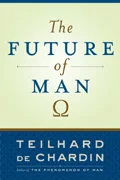
The Future of Man
Teilhard de ChardinPaperback 2004-04-20
Publisher Description
"The Future of Man" is a magnificent introduction to the thoughts and writings of Pierre Teilhard de Chardin, one of the few figures in the history of the Catholic Church to achieve renown as both a scientist and a theologian. Trained as a paleontologist and ordained as a Jesuit priest, Teilhard de Chardin devoted himself to establishing the intimate, interdependent connection between science--particularly the theory of evolution--and the basic tenets of the Christian faith. At the center of his philosophy was the belief that the human species is evolving spiritually, progressing from a simple faith to higher and higher forms of consciousness, including a consciousness of God, and culminating in the ultimate understanding of humankind's place and purpose in the universe. The Church, which would not condone his philosophical writings, refused to allow their publication during his lifetime. Written over a period of thirty years and presented here in chronological order, the essays co
$26.99
$26.99
Click & collect: Select your store
Get information on product availability in store.

.png&w=64&q=75)
.png&w=64&q=75)

.png&w=48&q=75)
Publisher Description
"The Future of Man" is a magnificent introduction to the thoughts and writings of Pierre Teilhard de Chardin, one of the few figures in the history of the Catholic Church to achieve renown as both a scientist and a theologian. Trained as a paleontologist and ordained as a Jesuit priest, Teilhard de Chardin devoted himself to establishing the intimate, interdependent connection between science--particularly the theory of evolution--and the basic tenets of the Christian faith. At the center of his philosophy was the belief that the human species is evolving spiritually, progressing from a simple faith to higher and higher forms of consciousness, including a consciousness of God, and culminating in the ultimate understanding of humankind's place and purpose in the universe. The Church, which would not condone his philosophical writings, refused to allow their publication during his lifetime. Written over a period of thirty years and presented here in chronological order, the essays co